The Bunny House Font: A Handwritten Typeface for Crafters
As a maker who designs everything from greeting cards to product labels, I know that the right font can completely transform a project. It’s the personality behind your words, the charm that makes a customer pause and smile. When I first started using Bunny House, a sweet and friendly handwritten font, I realized it was more than just a pretty typeface; it became a practical tool for adding a lovely touch to nearly everything I create.
The Personality of Bunny House
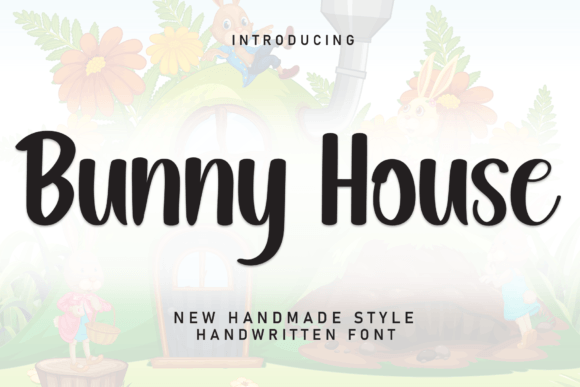
Bunny House has a distinct creative appeal. Its style is cute and fun, but never childish or overly whimsical. The letters flow with a gentle, connected rhythm that feels authentically handwritten—like a personal note from a friend. This charm makes it incredibly versatile. It avoids the overly dramatic swirls of some script fonts, offering a readability that is essential for commercial craft work. Its overall vibe is warm, inviting, and full of personality, perfect for designs that need to feel special and crafted with care.
Practical Craft Uses for Your Handmade Business
For crafters and sellers, a font must be both beautiful and commercially useful. Bunny House excels in this space. I’ve integrated it across a wide range of physical products and digital designs, and its performance is consistently reliable.
Paper Goods and Stationery
This is where Bunny House truly shines. It is, as described, ideal for wedding invitations. I use it for the main event name, the couple’s names, and dates on welcome boards or seating charts. Beyond weddings, it elevates everyday cards—birthday invitations, thank-you notes, and holiday greetings—giving them a personalized, premium feel. For printable creators, Bunny House works beautifully in digital downloads like wall art quotes, planner cover pages, and scrapbooking elements.
Product Labels, Packaging, and Tags
For my small shop, branding consistency is key. Bunny House has become a core part of my brand identity on product labels for candles, jars of honey, and handmade soap. On a small sticker or tag, its clarity ensures the product name is still readable, while its friendly style enhances the perceived quality. It makes a boutique tag for a garment or a simple logo for a tote bag feel intentionally designed.
Merchandise and Seasonal Designs
When creating designs for cutting machines like Cricut or Silhouette, Bunny House is a dependable choice. I use it for vinyl text on mugs, shirts, and signs. For a farmhouse-style kitchen sign or a seasonal holiday product packaging line, the font adds that handmade appeal without looking messy. Its style is adaptable: on a spring-themed sticker it feels fresh; on a cozy autumn wall art printable, it feels warm.
Readability and Use Advice for Makers
A crucial consideration for any craft font is how it performs in real-world applications. Bunny House is primarily a display font, best suited for short phrases, names, titles, and decorative wording. I recommend it for product names on labels, main headlines on invitations, and focal text on signs. For longer paragraphs, like the terms on a candle label or the full address details on an invitation, I pair it with a simpler, more readable typeface.
For readability on small items, like tiny stickers or intricate SVG designs for cutting, test your mockup previews carefully. Ensure the letter spacing isn’t too tight and that the unique character shapes are clear when scaled down. The font’s inherent friendliness usually translates well, but a quick print or cut test is always wise.
Building a Cohesive Look with Font Pairings
Bunny House is an expressive script font, and it loves to be supported by a clean, neutral partner. My most successful pairings involve using it as the star, complemented by a clean sans serif font for all secondary information. For example, on a wedding invitation, “Mr. & Mrs. Smith” might be in beautiful Bunny House, while the date, time, and location details are in a simple, modern sans serif. This creates a hierarchy that is both aesthetically pleasing and functionally clear.
You could also pair it with a simple serif font for a more classic, editorial feel on things like printable recipe cards or journal templates. The goal is to let Bunny House carry the emotional weight and primary customer appeal, while the paired font ensures everything remains easy to read and professionally laid out.
A Note on File Formats and Features
Before committing a font to your design assets library, check its included features. For a font like Bunny House, look for things like alternates or ligatures that can add variation to repeated words, enhancing your logo design or packaging design. Confirm the file formats are compatible with your design software, whether you’re working in a vector program for SVG designs or a page layout tool for printed cards. Also, verify its multilingual support if your products or client work require text in other languages.
Commercial Licensing for Selling Your Work
This is a vital, practical point for every seller. When using any premium font for commercial purposes—like selling physical products, digital printables, templates, or merchandise—you must ensure your license permits it. Most fonts, including Bunny House, come with a standard commercial license that allows you to use them on items you sell. However, always read the specific license agreement from the font creator or distributor. It clarifies if you can use the font in digital downloads for others to use, in client work like wedding invitations for a customer, or on web design and social media graphics for your brand. A proper commercial font license is the foundation of using creative fonts ethically and legally in your business.
Integrating Bunny House into my workflow has been about marrying beauty with utility. Its sweet and friendly handwritten style doesn’t just decorate a product; it communicates care, quality, and a unique brand voice. From a simple sticker to a complex wedding stationery suite, it provides that lovely touch which resonates with customers and makes your handmade creations stand out. For crafters looking to add warmth and readability to their projects, this typeface is a genuinely valuable design asset.